Hope begins with one step.
Healing Modalities

Healing Support Is More Than One Approach
Healing modalities are complementary wellness practices that may support relaxation, stress management, mindfulness, comfort, self-awareness, and overall quality of life.
Different approaches work for different people. The goal isn't to replace medical care—it is to explore supportive practices that can become part of your personal wellness journey.
Mind–Body Practices
Mindful Planning
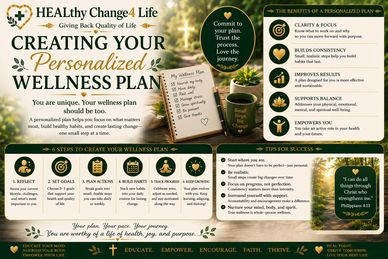
Mindful planning means creating your day with intention while respecting your time, energy, priorities, and personal needs. Instead of trying to accomplish everything at once, it encourages you to focus on what matters and build realistic routines.
Simple examples include making a short priority list, planning meals ahead, scheduling time for movement and rest, preparing for tomorrow the night before, breaking large tasks into smaller steps, or leaving space in your day to recharge.
Plan with purpose. Leave room for life.
Journaling
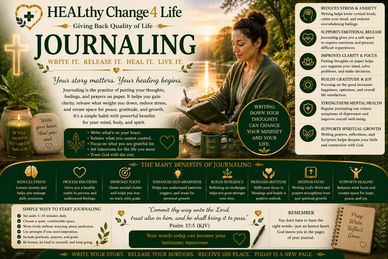
Journaling creates a private space to slow down, reflect, organize your thoughts, and become more aware of your emotions and experiences. There is no right or wrong way to journal—it can be as simple or creative as you want.
Try writing about your day, recording something you're grateful for, tracking healthy habits, writing prayers, setting intentions, celebrating progress, or putting thoughts on paper when your mind feels busy.
Write it down. Reflect. Notice your journey.
Music & Wellness
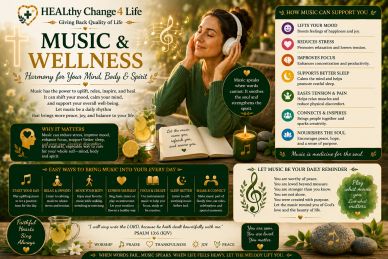
Music speaks when words are hard to find.
Music can be a meaningful part of everyday wellness. Listening, singing, playing an instrument, or moving to music can encourage relaxation, emotional expression, positive memories, social connection, movement, and enjoyment.
Different music can serve different purposes—energizing you during activity, creating a peaceful environment for rest, or simply bringing more joy into your day.
Guided Imagery

Guided imagery combines relaxation with mental visualization. You might imagine a peaceful beach, quiet garden, favorite place, or another calming scene while listening to spoken guidance. It can be used as a simple relaxation and stress-management practice.
Meditation
Meditation is a practice of intentionally slowing down and focusing your attention. It may support relaxation, stress management, emotional awareness, and mindfulness. Simple practices can include quiet reflection, focusing on your breathing, listening to a guided meditation, or spending a few peaceful minutes without distractions.
Laughter & Wellness
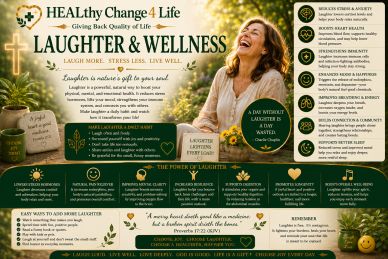
Laughter can support relaxation, positive mood, social connection, and stress relief. Sharing a funny moment, watching something that makes you laugh, playing with grandchildren, or simply finding more opportunities for joy can be a meaningful part of everyday wellness.
Art & Creativity
Art & Creativity
Art & Creativity
Creative activities provide opportunities for enjoyment, self-expression, relaxation, and emotional connection. Painting, drawing, writing, music, photography, crafting, gardening, coloring, cooking, and dancing are just a few ways creativity can become part of your wellness routine.
Energy & Frequency Support
Reiki
Frequency-Based
Frequency-Based
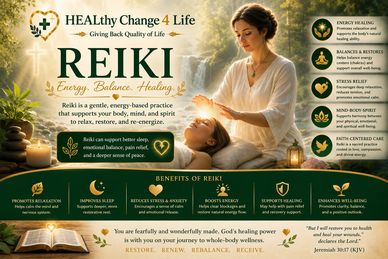
Reiki is a complementary energy-based practice that uses gentle touch or hands positioned near the body to encourage relaxation and a sense of well-being. Sessions may provide quiet time for rest, reflection, prayer, and personal awareness.
Frequency-Based
Frequency-Based
Frequency-Based
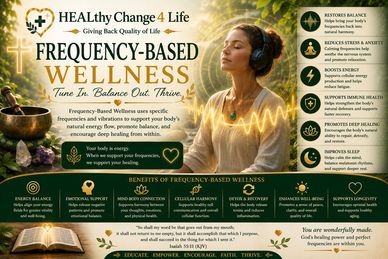
Frequency-based wellness uses sound, vibration, tones, or energetic technologies as complementary tools for relaxation and wellness awareness. These practices are not a replacement for medical evaluation or treatment
Sound Therapy
Frequency-Based
Magnetic Therapy
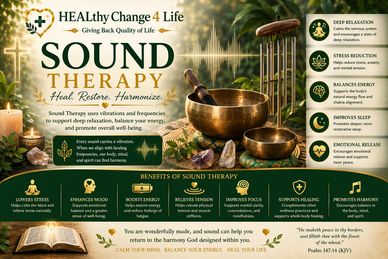
Sound-based wellness practices use tones, music, singing bowls, chimes, or other sounds to create a relaxing environment. Sound can be incorporated into meditation, breathing, reflection, or quiet time.
Magnetic Therapy
Magnetic Therapy
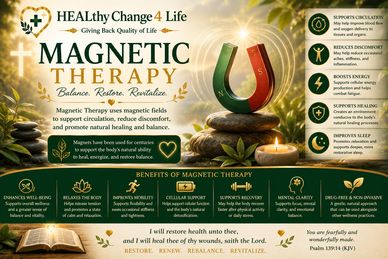
Magnetic therapy is a complementary wellness practice that uses static magnets or magnetic fields placed near the body. Some people explore magnetic products as part of their personal routines for comfort, relaxation, and general well-being.
Examples may include magnetic mats, pads, bracelets, or other wellness devices.
Explore. Relax. Support your wellness your way.
Biofield Therapies
Biofield practices are based on complementary wellness concepts involving the energy field believed to surround and interact with the body. These approaches are commonly explored for relaxation, self-awareness, and whole-person wellness.
Acupuncture
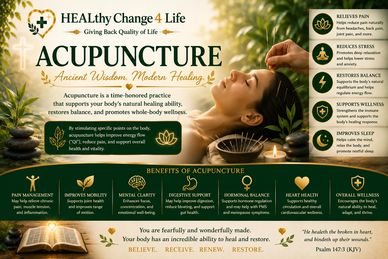
Acupuncture is a practice rooted in Traditional Chinese Medicine that involves inserting very thin needles at specific points on the body. Traditionally, these points are associated with meridians and the flow of qi, while modern research also studies acupuncture through nervous-system and physiological mechanisms.
People may explore acupuncture with a properly trained and licensed practitioner as a complementary approach for relaxation, comfort, and overall well-being.
Traditional practice. Whole-person wellness. Professional care.
TMC Medidans
TMC Medidans
TMC Medidans
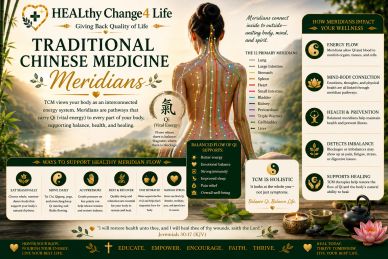
In Traditional Chinese Medicine, meridians are described as pathways through which qi, or vital energy, flows. Meridian-based practices may include acupuncture, acupressure, movement, and other traditional approaches intended to support balance within this healing framework.
Acupressure
TMC Medidans
TMC Medidans
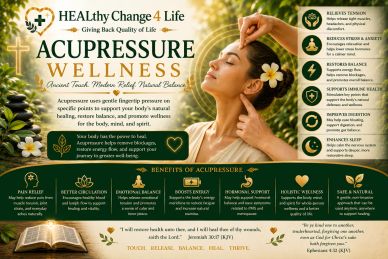
Acupressure is a complementary practice rooted in Traditional Chinese Medicine that uses finger, hand, or gentle tool pressure on specific points of the body rather than needles. These points are traditionally associated with meridians and the flow of qi.
People may explore acupressure as part of a wellness routine for relaxation, comfort, body awareness, and stress management.
Gentle pressure. Mindful connection. Whole-person wellness.
Therapeutic Touch
Massage Therapy
Massage Therapy
Massage uses hands-on manipulation of muscles and soft tissues to support relaxation and physical comfort. Different styles range from gentle relaxation massage to more focused techniques and should be provided by an appropriately qualified professional.
Reflexology
Massage Therapy
Reflexology is a complementary practice that applies pressure to specific areas of the feet, hands, or ears. Reflexology traditions associate these areas with other parts of the body. Many people use the practice primarily for relaxation and general well-being.
Myofascial Release
Myofascial Release
Myofascial release uses gentle, sustained pressure and movement directed toward the fascia—the connective tissue surrounding muscles and other structures. It may be incorporated into professional bodywork or movement practices to support comfort and mobility.
Stretching
Chiropractic Care
Myofascial Release
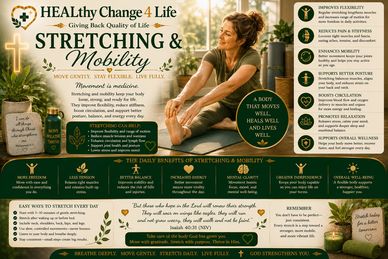
Stretching gently moves muscles and joints through comfortable ranges of motion. Regular stretching can support flexibility, mobility, relaxation, and everyday movement. Simple examples include morning stretches, stretching after walking, or gentle movement after sitting for long periods.
Chiropractic Care
Chiropractic Care
Chiropractic Care
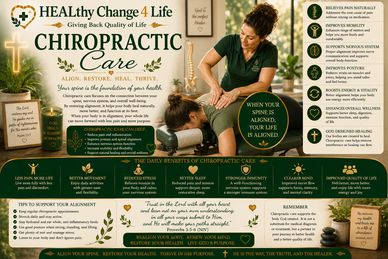
Chiropractic care is a licensed healthcare profession focused largely on the musculoskeletal system, particularly the spine. Chiropractors may use manual techniques, exercise education, and other approaches to support movement and physical function.
Light, Heat, Color & Water Therapies
Red Light Therapy
Red Light Therapy
Red Light Therapy
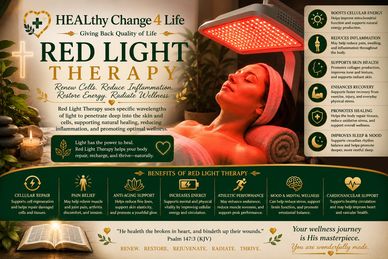
Red light therapy uses specific wavelengths of red and near-infrared light delivered to the body through specialized devices. It is used in wellness and clinical settings for a variety of purposes. Device quality, wavelength, intensity, and exposure time can vary, so appropriate use matters.
Sauna Therapy
Red Light Therapy
Red Light Therapy
Sauna uses dry or humid heat to create a warm environment for relaxation. Many people enjoy sauna as part of a self-care routine for rest, relaxation, and overall well-being. Hydration and individual heat tolerance are important.
Hydrotherapy
Red Light Therapy
Constast Therapy
Hydrotherapy uses water in different temperatures, pressures, or forms as part of a wellness or rehabilitation practice. Examples include warm baths, pools, showers, and professionally supervised aquatic therapies.
Constast Therapy
Constast Therapy
Contrast practices alternate warm and cool temperatures, such as alternating warm and cool water. Some people incorporate contrast practices into recovery or wellness routines, although responses vary and extreme temperatures aren't appropriate for everyone.
Chromotherapy
Chromotherapy
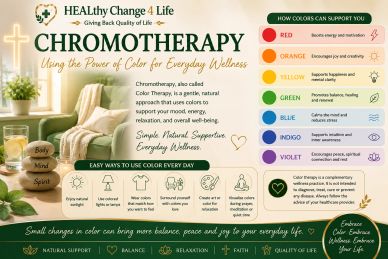
Color Therapy, also known as Chromotherapy, is a complementary wellness practice that explores how colors may influence mood, relaxation, and overall well-being. It is often discussed alongside practices such as Reiki, meditation, mindfulness, and sound or frequency-based wellness approaches.
Natural Approaches
Grounding / Earthing
Aromatherapy Essential Oils
Aromatherapy Essential Oils
Spending time outdoors can be a simple way to slow down, reconnect with your surroundings, and create mindful moments. Examples include walking outside, sitting in the sunshine or shade, gardening, enjoying the beach, or walking barefoot on grass or sand when it is safe to do so.
Aromatherapy Essential Oils
Aromatherapy Essential Oils
Aromatherapy Essential Oils
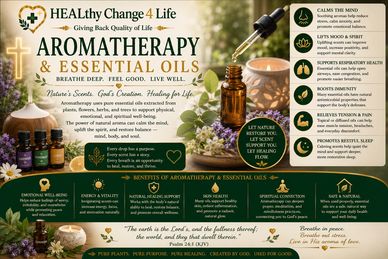
Aromatherapy uses the scents of plant-derived essential oils to create an environment for relaxation and sensory enjoyment. Examples include using an appropriate diffuser or simply enjoying a preferred aroma. Essential oils require safe handling and should not automatically be assumed safe for ingestion or direct skin application
Castor Oil Packs
Aromatherapy Essential Oils
Castor oil packs are a traditional wellness practice involving castor oil applied externally with cloth, sometimes accompanied by gentle warmth. People may use them during quiet self-care time for relaxation and comfort. Claims that castor oil packs “detox” the liver or remove toxins aren't well established.
Dry Brushing
Dry brushing involves using a dry, soft-bristled body brush on the skin before bathing. Some people enjoy it as part of a personal-care routine for exfoliation and sensory stimulation. Use gentle pressure and avoid irritated, injured, or sensitive skin.
Gardening & Wellness
Gardening & Wellness

Gardening combines movement, creativity, time outdoors, and connection with nature. Planting flowers, growing herbs or vegetables, watering plants, tending a container garden, or simply caring for houseplants can provide meaningful activity and enjoyment.
Learn Grow & Thrive
Understanding Complementary & Integrative Health
National Center for Complementary and Integrative Health (NCCIH)
A great starting point that explains what complementary, alternative, and integrative health mean and how they differ.
Chronic Pain & Complementary Health
A helpful overview of complementary approaches that have been studied for chronic pain, including massage, acupuncture, mindfulness, yoga, tai chi, and more.
Center for Integrative & Lifestyle Medicine
Explore how an academic medical center combines lifestyle medicine with evidence-based complementary therapies such as acupuncture, massage, and holistic psychotherapy.